- Published on
My Build3 Accelerator Experience
- Authors

- Name
- Rakesh Tembhurne
- @tembhurnerakesh
The Dream
Building a successful startup has been my long-time dream. I have been trying again and again to make it happen — and recently, that persistence paid off in a new way: I applied to build3 and got selected.
The Goa Kickoff
The program began with a 4-day in-person meetup at build3's home base in Goa. I packed my bags and went — and those turned out to be some really good days.
First of all, I was genuinely happy to see the community. There were around 80 startup founders in the room. Talking with them, interacting, sharing our struggles, and discussing ideas felt like home.
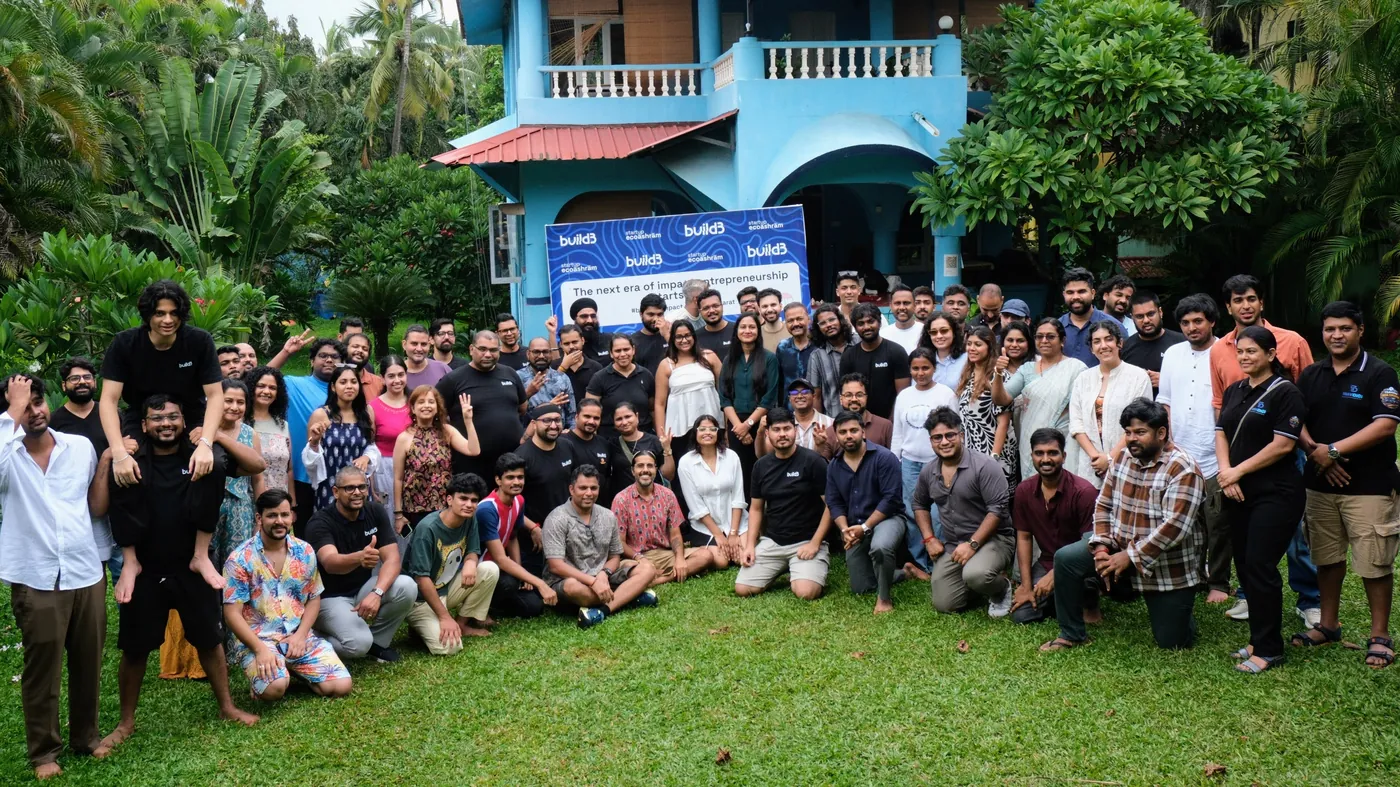
Entrepreneurship Is a Lonely Journey — Until It Isn't
A lot of people struggle alone on their founder journey. Entrepreneurship has a reputation for being lonely, and from my experience, it truly is when you do it by yourself.
Joining this community made one thing very clear to me: I should have been part of something like this much earlier. If I had, I would not have lost so many years building things alone.
Meeting Varun Chawla and the Team
One highlight was meeting Varun Chawla, the founder of build3, along with his team. I was delighted to find such down-to-earth, helpful people. Varun has put together a solid team, and you can feel the builder culture in how they operate.
I joined Cohort 10 of the Impact Accelerator, and I believe the wider build3 community already has around 1,000 entrepreneurs. Being part of it has been incredible.
Some Learnings
The kickoff was packed with sessions and conversations that left me with a lot to chew on. Here are the biggest takeaways, in my own words.
You Are Not Alone
You are not alone in this journey. Many founders are facing similar problems, and it's okay to struggle. Simply hearing other people voice the same doubts you carry quietly is strangely comforting.
Ideas Are Cheap
Every person has ideas — and often very different ideas about the same thing. Tell someone about your idea and they'll immediately give you a different perspective: what they would build, which feature they would focus on. It made me wonder why around ninety percent of ideas fail — because ideas are cheap. Everyone has tons of them. Execution is the scarce part.
Startups Are a Marathon — And You Can Barely Run 200 Meters
Most startups fail. That's just the truth. The known reasons are many: bad product, lack of market fit, co-founder conflicts, and so on.
Thinking you can win a marathon when you can barely run 200 meters captures it perfectly. You can go wrong in so many ways:
- Overestimating yourself — believing you can win means assuming you are the best of the best.
- Miscalculating time — it takes far longer than you think. Patience and endurance are almost always underestimated.
- Underestimating the transformation — your body loses a lot and gains some things back, and that transformation is painful.
- Forgetting your refreshments — you assume someone else will carry you through (like an investor), and that's not always true.
- Hitting the wall at 10K — you realize your body wasn't ready for a full marathon, and the pain is unbearable long before the finish line.
And then there's the loneliness of the race. Somewhere down the course you don't see anyone around. You know other runners exist, but you have no way to reach them, and the only company is you, your mind, your body, and whatever convinced you that you wanted all this in the first place.
Why Do We Choose This?
You already know all of this going in. You know the suffering, yet you choose it anyway, and you drag yourself (and sometimes your loved ones) into it. Why? What's your Ikigai? What's that itch, that feeling, that sensation in your mind-body machine? What's that hope you're chasing?
We actually learned about Ikigai during the program — the classic framework of doing what you love, doing what matters, doing what you're good at, and doing something you can be paid for. It might push you some distance forward. But even then, how long? You will start questioning everything — you did in the past, and you probably will again.
The 30-Second Pitch
One practical skill we learned: introduce your startup in just 30 seconds.
People are drowning in information — everything is fighting for their attention. In those 15–30 seconds, your goal is simple: make them remember you. Your pitch has to strike a chord that sticks.
It works in layers: if you want someone to listen for five minutes, your first ten seconds must earn the next thirty, and those thirty seconds must earn the full five minutes. That's how storytelling works — and mastering this structure matters more than I expected.
Marketing Is About Entering Someone's Head
How do you make a person trust you? How do you create the impression that your product will solve their pain? That's where neuromarketing comes in.
Some things I took away:
- First impressions happen in ~15 milliseconds. People judge you by how you look. Choosing colors, contrast, and a name that evokes emotion is not decoration; it's strategy.
- Emotion drives memory — your brand has to evoke feelings and plant an emotional hook.
- Marketing reduces to three levers: give people relief, boost their ego or status, or provide/save resources like time and money. Every brand is pulling one of these.
- Master distraction or be distracted — we live in a world engineered to grab attention. Those who learn how these mechanisms work (and how to use them) do far better than those who don't. The rare few simply master themselves and become immune. It's a constant tug-of-war between these two opposites.
And then there's the artist's trick: making people believe you aren't selling at all — so that buying feels like their idea.
The Pain of Paying
On pricing: paying feels close to physical pain. Whenever a person has to make a payment, there is instant hesitation, and that's one of the biggest hurdles for any startup, especially online apps.
The good news is that this pain can be designed around. A few approaches we discussed:
- Bundling — club the price with other things so the pain is diluted across the package.
- Delayed payment — push the payment into the future so it doesn't hurt now.
- Abstraction — use credits, wallets, or token systems so spending doesn't feel like payment.
- Zero-friction checkout — reduce the time and steps involved in paying.
On top of that, you can shape how the price feels using cognitive biases like anchoring: when a person sees a large price first and then a decent one next to it, their mind uses the first number as the baseline. Anchors can create the impression that your pricing is a bargain. There are several such techniques for presenting pricing as the smooth, natural, default option — I don't know them all yet, but now I know they exist and why they work.
Know an Investor's Thesis Before You Reach Out
Another thing I learned during the funding exercises: every accelerator or investor has a thesis. They have already thought about which kinds of startups they will select, what kind of impact they want to make, and what stage they invest in.
This matters because not everyone is worth your time. Before approaching any investor, figure out their theme. For example, build3 typically looks for purpose plus profit before investing — both need to be present in your startup. That's their thesis. Knowing this upfront saves you from pitching to investors who were never going to say yes.
Choosing a Co-Founder
Finding a proper co-founder came up repeatedly — it's one of the most widely discussed startup problems (YC founders talk about it often), and for good reason: the majority of startups shut down because of fights and problems between co-founders, even among funded ones.
So one has to be extremely careful when selecting a co-founder. There are plenty of strong opinions out there about it too — how many co-founders to have, whether having one is better than going solo, and so on. The sessions made it clear this decision deserves far more deliberation than most founders give it.
Treasury Management and Runway
We also had sessions on treasury management, and how critical it is for startups — especially in the early years between pre-seed and Series A, when the real question is: how long can you keep the company alive?
A few key takeaways:
- Runway is everything early on. Your main challenge is keeping the company afloat, not growing fast. It's okay to slow down a bit if it means staying alive longer.
- Runway calculations are never accurate. Things happen that can't be predicted, and emergencies don't announce themselves. So you always add a margin of safety.
- The accepted practice: subtract 3 months from your calculated runway. Whatever runway you compute, consider that minus three months as your actual runway.
- Beyond Series B, the question shifts — to where your reserve cash sits and how it's managed.
- And running alongside all of this: hiring the right people, which most companies get wrong on the way up.
Working on Yourself: From Ikigai to Presence
The 4 days had a beautiful arc. They started with Varun's session on Ikigai, and ended with the final session of the meetup — "Your Presence is Your Power" by Pranaya Gidwani, a conscious leadership coach. That closing session made the whole trip worth it.
The crux of Pranaya's session was captured in a shloka from the Gita:
You have a right to your effort, never to the fruit of it. Don't let the outcome be your reason to act, and don't let the fear of the outcome stop you from acting at all.
This ties straight back into my marathon example from earlier. If you only work on your startup and never work on yourself, it will hurt you badly — because ultimately, the engine that runs everything is you.
Pranaya's session helped us look inside ourselves and examine what fuels our own leadership styles. After days packed with pricing frameworks, pitch structures, and runway math, closing with an inward look was exactly what we needed.
More to Come
That's it for this one — I'll keep posting my learnings and experiences as the program unfolds. Stay tuned.
Related Posts
Who Actually Profits From AI in 2026
Big tech spends hundreds of billions on AI hardware while most AI companies lose money on the technology itself. Where the cash actually flows, why India's paperwork economy is the real 2026 opportunity, and the syllabus to build it.
On Finding Good Market — Build3 Lessons
Build3 Session 2 notes on why market beats idea — the surfing analogy, what a market really is, 3 market mistakes, and 6 lenses to find a good one.
On Sins, Stages, and Staying on Path — Build3 Lessons
Short notes from Build3 Session 1 with my take on each — the 4 startup sins, 5 stages, and why I am going solo first.